10 Best Blade For Table Saws 2026 in the United States

Related Products
Up to 20% off


Our technology thoroughly searches through the online shopping world, reviewing hundreds of sites. We then process and analyze this information, updating in real-time to bring you the latest top-rated products. This way, you always get the best and most current options available.

Our Top Picks
Winner
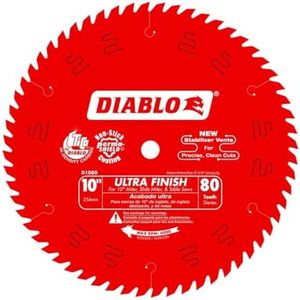
Diablo Ultra Finish Saw Blade for Wood - 10" Diameter, 80 Hi-ATB Teeth, 5/8" Arbor, .098" Kerf, 15-Degree Hook Angle, .071" Plate, 6000 Max RPM - D1080X
Most important from
4736 reviews
The Diablo Ultra Finish Saw Blade is a solid choice for those needing a high-quality 10-inch blade for table saws, especially if you work with wood in cabinetmaking or fine woodworking. Its 80 teeth and Hi-ATB (High Alternate Top Bevel) tooth design help deliver very clean, chip-free crosscuts, which means less sanding afterward. The 0.098-inch kerf is laser-cut and quite thin, allowing for fast cuts with minimal waste, making it efficient for precise finishing work.
The blade is made from TiCo Hi-Density Carbide, a durable material that stays sharp longer and handles professional-grade use well. Additionally, the Perma-SHIELD non-stick coating helps prevent heat buildup and corrosion, which can extend the blade's life and maintain smooth cutting performance. The 5/8-inch arbor size fits standard table saws, ensuring easy installation.
The blade’s thin kerf and 15-degree hook angle are optimized for fine finishes but may not be ideal for heavy ripping or very rough cuts on hard materials. It’s designed primarily for wood and might not perform as well on other materials. For professionals or serious hobbyists focused on clean, precise cuts in wood, this blade offers great value. However, if you need a more versatile blade for varied cutting jobs, blades with fewer teeth or different tooth styles might be better suited.
Most important from
4736 reviews
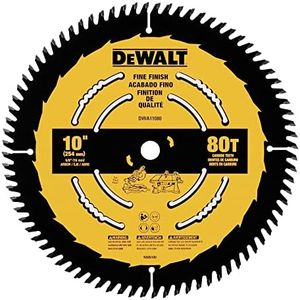
DEWALT Table Saw Blade, 10 inch, 80 Tooth, Fine Finish, Ultra Sharp Carbide (DWA11080)
The DEWALT 10-inch, 80-tooth table saw blade is designed for users who need a fine finish on their cuts, making it a strong choice for woodworking projects that demand smooth, clean edges. With 80 teeth, this blade is ideal for detailed, precise cutting rather than fast ripping through rough materials. The ultra-sharp carbide teeth are built to stay sharp longer, which means less frequent blade changes and consistent cutting quality. Its patented body slot design helps reduce vibration, improving accuracy and user comfort during operation.
The blade has a standard diameter of 10 inches and a thickness of about 0.04 inches, which is typical for fine finish blades, balancing cutting speed and minimal material waste. DEWALT blades usually offer a thin kerf that suits most 10-inch table saws with a 5/8-inch arbor size, making it compatible with many standard saws. One possible downside is that with more teeth and a finer cut, this blade may cut slower compared to blades with fewer teeth intended for rough or faster cuts.
This blade fits best for hobbyists, craftsmen, or anyone seeking detailed, clean cuts in wood and similar materials rather than high-volume ripping tasks. This DEWALT saw blade is a reliable, high-quality option for precise woodworking, thanks to its carbide teeth and vibration-reducing design, though it may not be the fastest choice for all cutting needs.
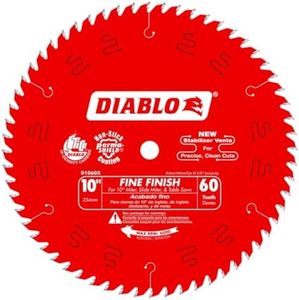
Diablo Fine Finish Saw Blade for Wood - Ultra-Smooth Cuts, 60 Hi-ATB Teeth, 10" Diameter, .098" Kerf, 5/8" Arbor - D1060X
The Diablo Fine Finish Saw Blade is designed for woodworkers seeking ultra-smooth, precise cuts on a table saw. Its 10-inch diameter and 60 teeth with Hi-ATB (high alternate top bevel) tooth configuration excel at minimizing splintering and tear-out, making it ideal for fine woodworking and projects where a clean finish is important. The thin kerf of .098 inches helps reduce material waste and allows faster cuts with less motor strain, which is great if you want efficiency and less sawdust.
Made from TiCo high-density carbide, the blade offers durability and long-lasting sharpness, while the Perma-SHIELD coating protects against heat and corrosion, so it maintains performance over time. The 5/8-inch arbor size is standard and fits most table saws easily. With 60 teeth and a thin kerf, this blade is optimized for smooth finish cuts rather than heavy ripping or very fast rough cuts. It may not be the best choice if you need to cut large volumes of wood quickly or work on very hard materials. However, its shock-resistant design adds strength for tougher jobs.
Weighing only 0.3 pounds, it is lightweight and easy to handle. Featuring a balance of clean cutting, durability, and standard sizing, this Diablo blade suits hobbyists and professionals focused on fine woodworking and cabinetry who want a reliable blade that reduces sanding after cuts.