We Use CookiesWe use cookies to enhance the security, performance, functionality and for analytical and promotional activities. By continuing to browse this site you are agreeing to our privacy policy

10 Best Roofing Underlayment Materials 2026 in the United States
How do we rank products for you?

Our technology thoroughly searches through the online shopping world, reviewing hundreds of sites. We then process and analyze this information, updating in real-time to bring you the latest top-rated products. This way, you always get the best and most current options available.

headphones-stars

Our Top Picks

#1

Winner

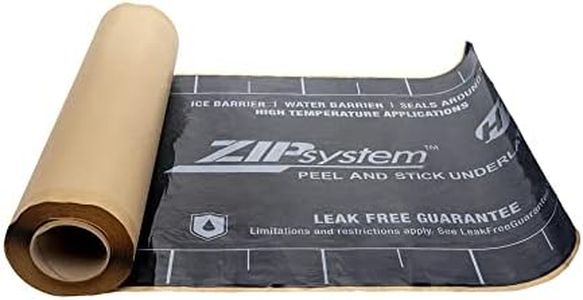
ZIP System Peel and Stick Underlayment | Waterproof Ice and Water Barrier Roof Underlayment (High Temp)

The ZIP System Peel and Stick Underlayment is a high-performance roofing underlayment designed to protect areas vulnerable to leaks or water damage, such as eaves, valleys, or entire roofs.

Made from self-adhered rubberized asphalt, it effectively seals around nails, providing robust water resistance and an additional layer of protection against ice dams and wind-driven rain. Its slip-resistant surface makes it easier and safer to apply, which is a significant advantage for DIY enthusiasts and professional roofers alike. Additionally, it meets the code requirements for an ice barrier or roofing underlayment as per ESR-4904 standards.

One of its standout features is its high temperature tolerance, with a maximum service temperature of 260 degrees Fahrenheit, making it suitable for roofs in hot climates. However, the underlayment's thickness is not specified, which might be a consideration for those looking for a more substantial barrier. It's also relatively heavy at 51 pounds, which could make handling and installation more challenging. While it offers excellent water resistance, the product brief does not mention UV resistance, a factor that could affect its longevity if exposed to sunlight for extended periods.

#2

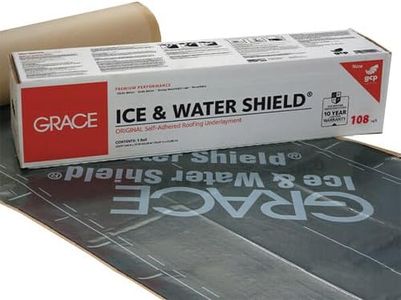
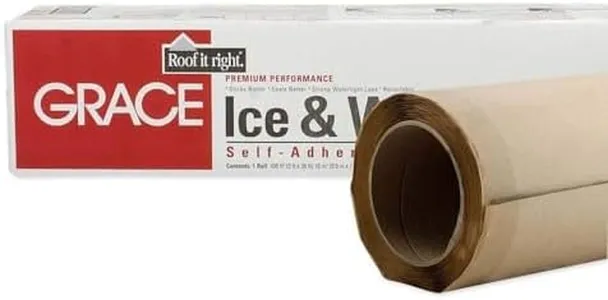
Grace Self Adhering Ice and Water Shield 36 Inch x 66.6 Feet (200 Square Feet) - Single Roll

The Grace Self Adhering Ice and Water Shield is a rubberized asphalt underlayment material designed for roof protection. With a roll thickness of 40 mils, this product provides a substantial barrier against water leakage and has superior adhesion to the deck, ensuring water-tight laps. One of its major strengths is its ability to seal around fasteners, which enhances its water resistance. The slip-resistant surface is beneficial for safer installation, and the split-release Ripcord feature allows for easy application on demand. Additionally, it can be applied over old GCP underlayment, adding to its versatility.

The product is UV resistant for up to 120 days, giving some protection against sun exposure during installation. However, at 55 pounds per roll, it may be heavy to handle for some users. Also, it has a relatively low Best Sellers Rank, which might indicate limited widespread use or recognition in the market. Despite this, it is covered by CertainTeed's SureStart Warranty, which adds to its reliability.

This product would be well-suited for homeowners or contractors looking for a durable, water-resistant underlayment with good adhesion and ease of application, especially in reroofing projects.

#3

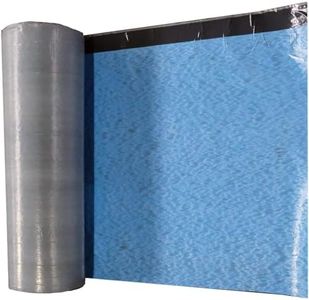
HydroShield Self Adhering Ice and Water Shield HT Underlayment (1)

Rating
7.9
Material Type
Thickness
Slip Resistance

Most important from
15 reviews

Material Type
The material is extremely strong and tough to cut, requiring a very sharp knife.
Thickness
This underlayment is very tacky and goes down easily, with a great thickness that's not too thin.
Slip Resistance
The surface texture makes walking on it much easier.

The HydroShield Self Adhering Ice and Water Shield HT Underlayment is designed for use as an underlayment on sloped roofs under various coverings including metal roofs like copper and zinc. Its blue polyolefin skid-resistant film provides better adhesion and slip resistance, which adds to the safety during installation. The material's ability to self-seal around nails and fasteners ensures excellent water protection, preventing leaks effectively.

The underlayment is also high temperature resistant, capable of withstanding temperatures from -40°F to 250°F, making it suitable for extreme climates. Additionally, it has a UV exposure limit of 120 days, allowing for temporary exposure before roof covering is applied. The roll dimensions (36 inches wide and 65 feet long) cover an area of 195 square feet, making it efficient for larger projects.

At 50 pounds, it might be slightly heavy for some users to handle alone. The thickness of 40 millimeters ensures durability and resilience but might be overkill for less demanding applications. The split-back release liner aids in easier and quicker application. This product is ideal for both residential and commercial buildings requiring robust, high-temperature resistant underlayment with excellent waterproofing properties.

Rating
7.9
Material Type
Thickness
Slip Resistance

Most important from
15 reviews

Material Type
The material is extremely strong and tough to cut, requiring a very sharp knife.
Thickness
This underlayment is very tacky and goes down easily, with a great thickness that's not too thin.
Slip Resistance
The surface texture makes walking on it much easier.

Buying Guide for the Best Roofing Underlayment Materials

Choosing the right roofing underlayment material is crucial for the longevity and effectiveness of your roof. Underlayment serves as a protective layer between your roof deck and the shingles, providing an extra barrier against water, wind, and other elements. When selecting the best underlayment for your needs, consider factors such as climate, roof type, and the specific requirements of your roofing material. Understanding the key specifications will help you make an informed decision that ensures your roof remains durable and efficient.
Material TypeThe material type of roofing underlayment is important because it determines the durability, water resistance, and overall performance of the underlayment. Common materials include asphalt-saturated felt, rubberized asphalt, and synthetic underlayment. Asphalt-saturated felt is traditional and cost-effective, suitable for moderate climates. Rubberized asphalt offers superior waterproofing and is ideal for areas with heavy rainfall or snow. Synthetic underlayment is lightweight, tear-resistant, and provides excellent protection in various weather conditions. Choose the material type based on your climate and the specific needs of your roof.
ThicknessThickness of the underlayment affects its durability and protective capabilities. Thicker underlayment generally provides better protection against water and physical damage. Underlayment thickness is usually measured in mils (thousandths of an inch) or in weight (pounds per square). For example, 15-pound felt is thinner and less durable than 30-pound felt. Thicker underlayment is recommended for areas prone to severe weather conditions, while thinner options may suffice in milder climates. Consider the typical weather patterns in your area when choosing the appropriate thickness.
Water ResistanceWater resistance is a critical spec because it determines how well the underlayment can prevent water from penetrating your roof deck. High water resistance is essential in regions with heavy rainfall, snow, or ice. Rubberized asphalt and synthetic underlayments typically offer superior water resistance compared to traditional felt. If you live in an area with frequent or heavy precipitation, opt for an underlayment with high water resistance to ensure your roof remains dry and protected.
UV ResistanceUV resistance refers to the underlayment's ability to withstand exposure to ultraviolet rays from the sun. This is important because prolonged UV exposure can degrade the material, reducing its effectiveness. Synthetic underlayments often have better UV resistance compared to asphalt-saturated felt. If your roofing project involves leaving the underlayment exposed for an extended period before the final roofing material is installed, choose an underlayment with high UV resistance to maintain its integrity.
Slip ResistanceSlip resistance is a safety feature that indicates how well the underlayment provides traction for workers during installation. A slip-resistant surface helps prevent accidents and injuries. Synthetic underlayments often have textured surfaces that enhance slip resistance, making them safer to work on. If safety during installation is a priority, especially on steep roofs or in wet conditions, select an underlayment with good slip resistance.
Temperature ToleranceTemperature tolerance indicates the range of temperatures the underlayment can withstand without losing its performance. This is important in areas with extreme temperature variations. Some underlayments can become brittle in cold weather or soften in high heat. Synthetic underlayments generally offer better temperature tolerance compared to traditional felt. If you live in a region with significant temperature fluctuations, choose an underlayment that can handle the extremes to ensure long-term durability.

FAQ