We Use CookiesWe use cookies to enhance the security, performance, functionality and for analytical and promotional activities. By continuing to browse this site you are agreeing to our privacy policy

10 Best Zoom Binoculars 2026 in the United States
How do we rank products for you?

Our technology thoroughly searches through the online shopping world, reviewing hundreds of sites. We then process and analyze this information, updating in real-time to bring you the latest top-rated products. This way, you always get the best and most current options available.

headphones-stars

Our Top Picks

#1

Winner

Canon 10x42 L is WP Image Stabilized Binoculars

Rating
10.0
Chosen by1,370
Magnification
Weight and Size

Most important from
219 reviews

Magnification
For amateur astronomers, these binoculars offer a perfect balance of magnification and portability, making them ideal for quick, handheld stargazing without the need for a tripod.
Weight and Size
Despite their weight and bulkiness, the Canon 10x42 L IS WP binoculars offer superior image quality, especially with IS activated, providing sharper, more detailed views.

The Canon 10x42 L IS WP Image Stabilized Binoculars offer a solid 10x magnification and a 42mm objective lens diameter, making them suitable for a wide range of uses from bird watching to sporting events. The standout feature is the image stabilization (IS), which helps maintain a steady view even at high magnification. This is particularly useful for extended viewing periods or for users with shaky hands.

These binoculars are waterproof, enhancing their durability and suitability for outdoor use in various weather conditions. The provided padded case and neoprene strap improve portability and comfort during use. However, the weight of 3.78 pounds makes them heavier and potentially less comfortable for prolonged handheld use. The use of AA batteries for the image stabilization feature might be seen as a drawback due to the need for regular replacements.

The higher price point and weight may make them less ideal for casual users and better suited for serious enthusiasts or those requiring high-performance optics.

Rating
10.0
Chosen by1,370
Magnification
Weight and Size

Most important from
219 reviews

Magnification
For amateur astronomers, these binoculars offer a perfect balance of magnification and portability, making them ideal for quick, handheld stargazing without the need for a tripod.
Weight and Size
Despite their weight and bulkiness, the Canon 10x42 L IS WP binoculars offer superior image quality, especially with IS activated, providing sharper, more detailed views.
#2

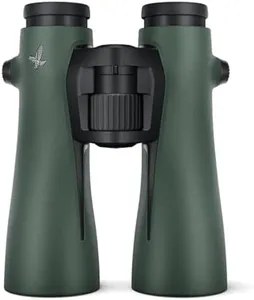
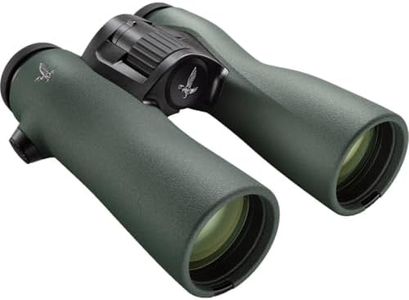
Swarovski NL Pure 12x42 Binoculars w/FSB Sidebag, Strap, Eyepiece, Lens Cover and Cleaning Kit 36012

Rating
10.0
Field of View
Weight and Size

Most important from
140 reviews

Field of View
The clarity, brightness, and field of view are unmatched, making these the best binoculars I've ever used.
Weight and Size
These binoculars are lightweight and provide crystal-clear views with perfect color fidelity and light transmission.

The Swarovski NL Pure 12x42 Binoculars are a solid choice for outdoor enthusiasts seeking high-quality optics. With a magnification of 12x and a 42mm objective lens, these binoculars deliver impressive detail, making them perfect for birdwatching, hiking, or sporting events. One standout feature is their large field of view, which is 339 feet at 1000 yards, allowing users to scan wide areas without losing focus on the details. The SWAROVISION technology enhances color fidelity and light transmission, resulting in bright and vivid images even in challenging lighting conditions.

The design is user-friendly, with a focusing mechanism that minimizes friction, making adjustments smooth and easy. Weighing in at 1.85 pounds, they strike a good balance between portability and performance, ideal for users on the go. Additionally, the use of magnesium technology ensures durability without adding extra weight.

These binoculars do come with a higher price tag, which may not be suitable for casual users or beginners. While their performance is remarkable, individuals just starting in birdwatching or outdoor activities might find more budget-friendly options that meet their needs without the premium features. At 13.75 x 7.75 x 3.75 inches, they might be a bit bulkier for those looking for ultra-compact models. The Swarovski NL Pure 12x42 Binoculars cater well to serious nature enthusiasts and professionals who value high performance and quality. Just keep in mind their investment level and size when making your decision.

Rating
10.0
Field of View
Weight and Size

Most important from
140 reviews

Field of View
The clarity, brightness, and field of view are unmatched, making these the best binoculars I've ever used.
Weight and Size
These binoculars are lightweight and provide crystal-clear views with perfect color fidelity and light transmission.
#3

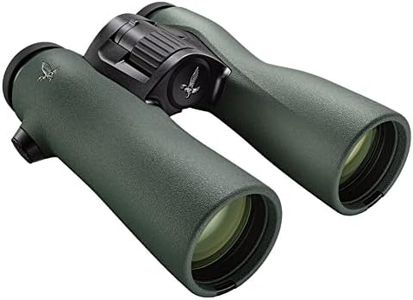
Swarovski NL Pure 10x42 Binoculars w/FSB Sidebag, Strap, Eyepiece, Lens Cover and Cleaning Kit 36010

Rating
9.7
Field of View
Weight and Size
Coatings

Most important from
140 reviews

Field of View
These binoculars deliver unmatched clarity, brightness, and a wide field of view that immerses you in the scene without eye strain or doubling.
Weight and Size
Ergonomics are thoughtfully designed with comfortable barrel shapes, well-placed focus knobs, and adjustable eyecups that lock firmly for both glasses wearers and non-wearers.
Coatings
The optics control chromatic aberration exceptionally well, rivaling even specialized fluorite lens scopes.

The Swarovski NL Pure 10x42 binoculars deliver impressive 10x magnification combined with a 42mm objective lens, making them great for detailed, long-distance viewing. They offer a wide field of view—339 feet at 1000 yards—which helps you see more without needing to move the binoculars much. Thanks to Swarovski’s SWAROVISION technology and special lens coatings, the images are sharp with vivid colors and good brightness, even in lower light.

The binoculars are built with lightweight yet strong magnesium materials, making them rugged but still portable, although at nearly 1.9 pounds and moderate size, they are not the smallest or lightest option out there. The focusing mechanism is smooth and designed to minimize friction, helping you quickly get clear views. These binoculars are priced at a premium and suit serious nature enthusiasts who want top image quality and durability in a compact package. Casual users looking for something lighter or more budget-friendly might find them a bit heavy and costly.

Rating
9.7
Field of View
Weight and Size
Coatings

Most important from
140 reviews

Field of View
These binoculars deliver unmatched clarity, brightness, and a wide field of view that immerses you in the scene without eye strain or doubling.
Weight and Size
Ergonomics are thoughtfully designed with comfortable barrel shapes, well-placed focus knobs, and adjustable eyecups that lock firmly for both glasses wearers and non-wearers.
Coatings
The optics control chromatic aberration exceptionally well, rivaling even specialized fluorite lens scopes.

Buying Guide for the Best Zoom Binoculars

When choosing zoom binoculars, it's important to consider several key specifications to ensure you get the best fit for your needs. Zoom binoculars allow you to adjust the magnification, making them versatile for various activities such as bird watching, sports events, or stargazing. Understanding the key specs will help you make an informed decision and get the most out of your purchase.
MagnificationMagnification indicates how many times closer an object will appear compared to the naked eye. For example, 10x magnification means the object will appear ten times closer. This spec is crucial because it determines how much detail you can see. Lower magnifications (7x to 10x) are generally easier to handle and provide a wider field of view, making them suitable for activities like bird watching or sports. Higher magnifications (12x and above) offer more detail but can be harder to stabilize without a tripod, making them better for stargazing or long-distance viewing. Choose a magnification based on the level of detail you need and how steady you can hold the binoculars.
Objective Lens DiameterThe objective lens diameter, measured in millimeters, is the size of the front lenses. This spec is important because it affects the amount of light that enters the binoculars, impacting image brightness and clarity. Larger diameters (42mm and above) allow more light, providing brighter images, especially in low-light conditions like dawn or dusk. Smaller diameters (25mm to 35mm) make the binoculars more compact and lightweight, suitable for daytime use and portability. Choose a diameter based on your need for brightness and portability.
Field of ViewField of view (FOV) is the width of the area you can see through the binoculars, usually measured in feet at 1,000 yards or meters at 1,000 meters. A wider FOV is important for tracking moving objects and scanning large areas, making it ideal for bird watching or sports events. Narrower FOVs provide more detail but cover less area, which can be useful for observing stationary objects. Consider your primary use to determine whether a wider or narrower FOV is more beneficial for you.
Eye ReliefEye relief is the distance from the eyepiece to your eye where you can still see the full field of view. This spec is particularly important for eyeglass wearers, as longer eye relief (15mm and above) allows you to see the entire image without removing your glasses. Shorter eye relief can be uncomfortable and limit the field of view for those who wear glasses. Choose binoculars with adequate eye relief to ensure comfort and a full viewing experience.
Weight and SizeThe weight and size of binoculars affect their portability and ease of use. Heavier and larger binoculars can provide better image quality and stability but may be cumbersome to carry for extended periods. Lighter and more compact models are easier to handle and transport, making them suitable for hiking or travel. Consider how and where you will use the binoculars to determine the right balance between image quality and portability.
Prism TypeBinoculars use either roof prisms or porro prisms to correct the orientation of the image. Roof prism binoculars are more compact and streamlined, making them easier to carry and handle. Porro prism binoculars tend to be bulkier but can offer better depth perception and a wider field of view. Choose the prism type based on your preference for portability versus image quality and depth perception.
CoatingsLens coatings improve light transmission, reduce glare, and enhance image clarity. Fully multi-coated lenses provide the best performance, offering bright and clear images. Multi-coated lenses are a good middle ground, while coated lenses are the most basic. Consider the quality of the coatings based on your need for image brightness and clarity, especially in low-light conditions.

FAQ